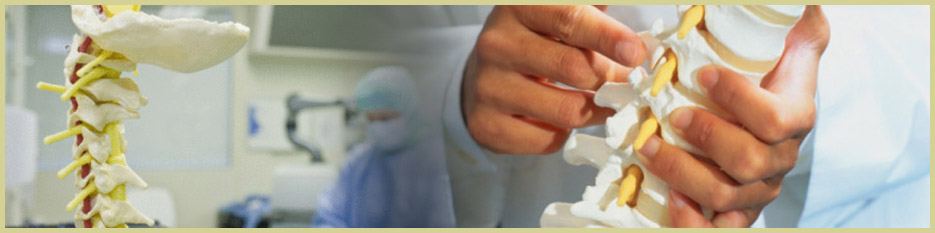
In human anatomy, the vertebral column (backbone or spine) is a column usually consisting of 33 vertebrae, the sacrum, intervertebral discs, and the coccyx situated in the dorsal aspect of the torso, separated by spinal discs. It houses and protects the spinal cord in its spinal canal.
There are a total of 33 vertebrae in the vertebral column, if assuming 4 coccygeal vertebrae.
The individual vertebrae, named according to region and position, from superior to inferior, are:
Cervical: 7 vertebrae (C1–C7)
C1 is known as "atlas" and supports the head, C2 is known as "axis", C7 is known as "vertabra prominens"
Possesses bifid spinous processes, which is absent in C1 and C7
Only cervical vertebrae have transverse foramen
Small-bodied
Thoracic: 12 vertebrae (T1–T12)
Distinguished by the presence of costal facets for the articulation of the heads of ribs
Body is intermediate in size between the cervical and lumbar vertebrae
Lumbar: 5 vertebrae (L1–L5)
Has a large body
Does not have costal facets nor transverse process foramina
Sacral: 5 (fused) vertebrae (S1–S5)
Coccygeal: 4 (3–5) (fused) vertebrae (Tailbone)
The information contained above is for educational purposes only. If you have
any questions relating to this or to any other orthopedic conditions, please consult
a board-certified orthopedic surgeon.
|